Retrieval-Augmented Generation (RAG) has become a key architecture for building AI systems that blend language models with external data.
But as real-world use cases grow more complex, traditional RAG is hitting its limits. Enter Agentic RAG — a more powerful, adaptive, and human-like approach to retrieval and reasoning.
Let’s explore how Agentic RAG redefines the landscape, and why it’s quickly becoming the new standard.
From One-Shot Search to Multi-Step Reasoning
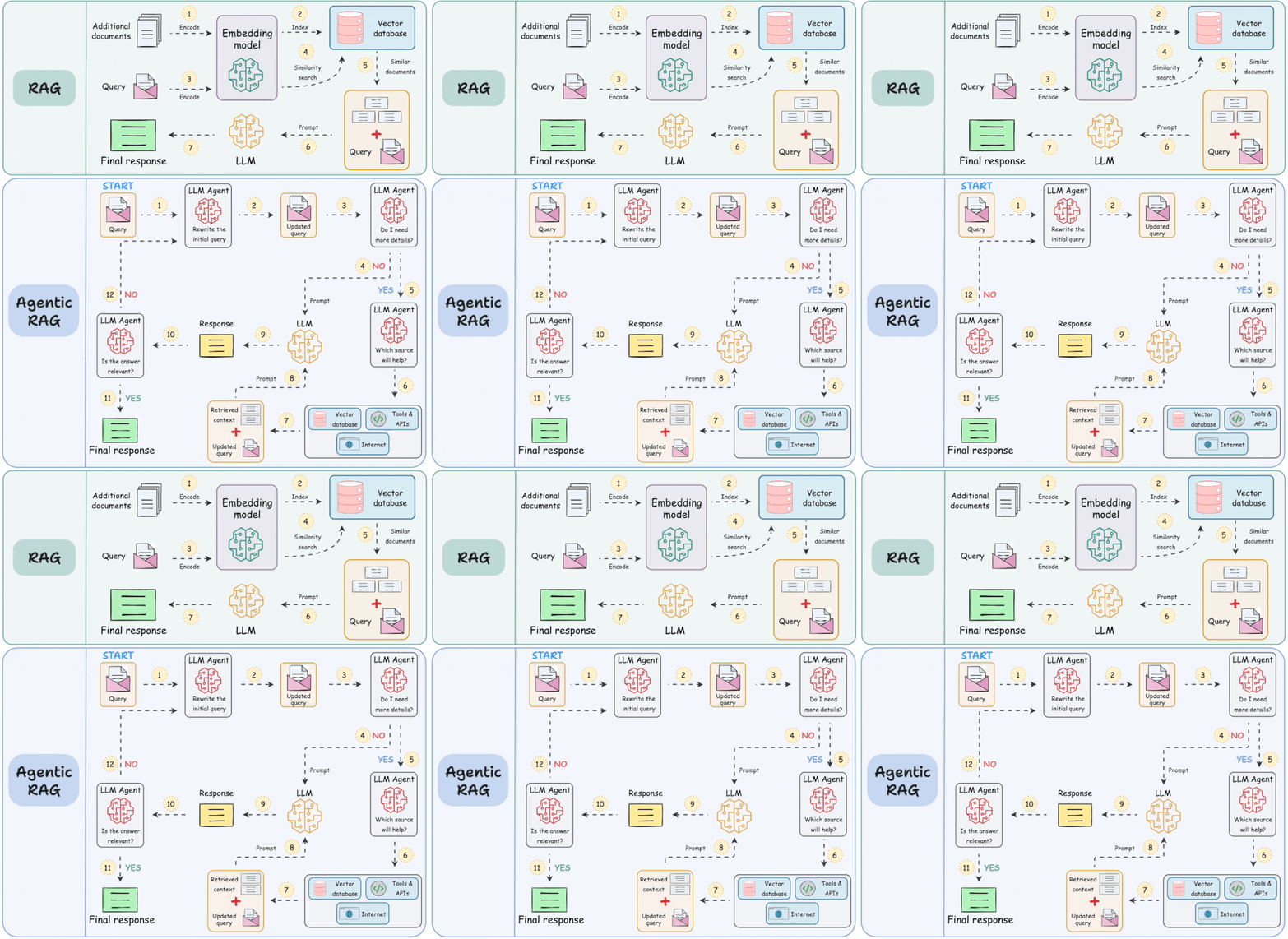
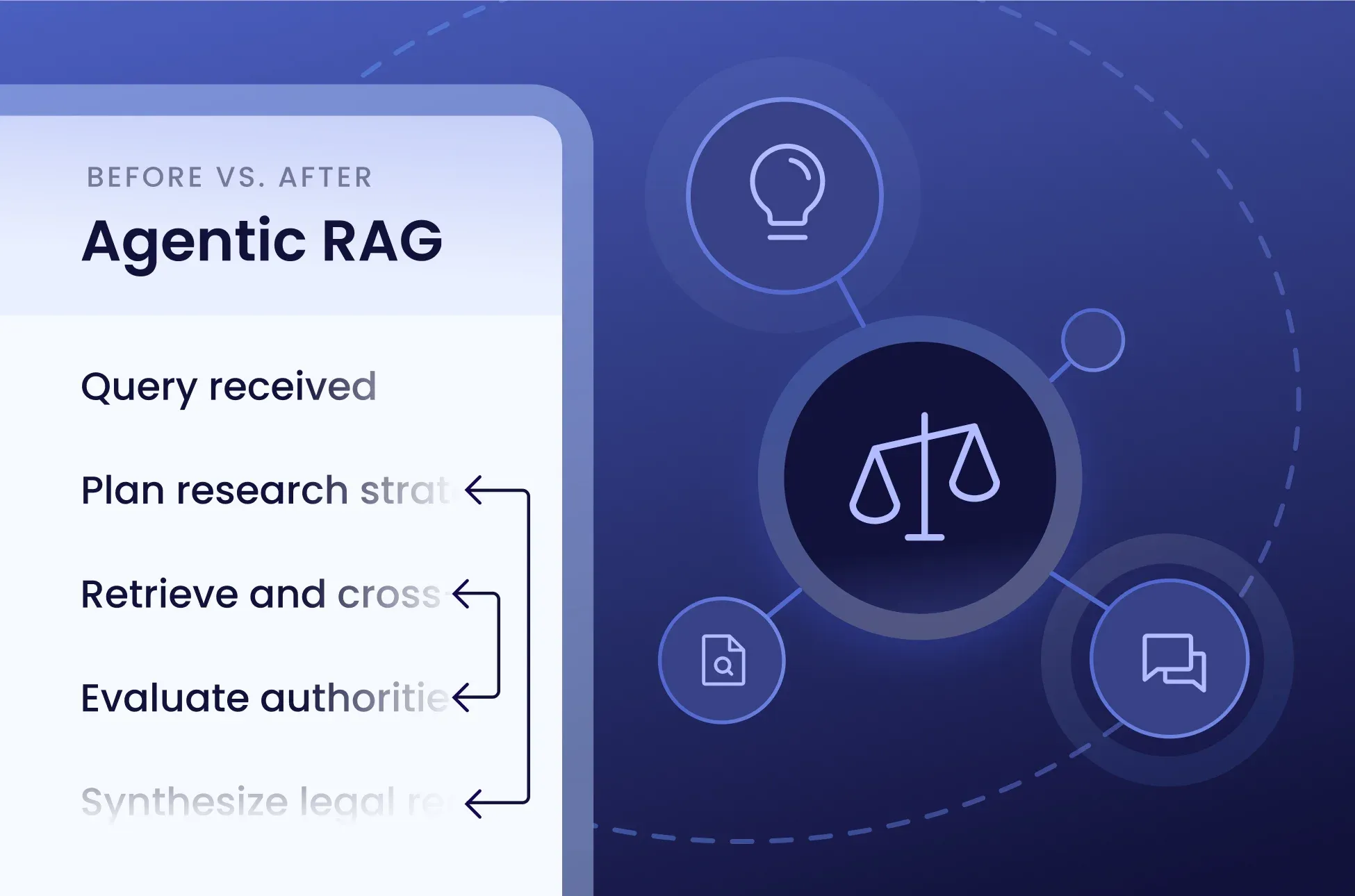
[Image Credits: Daily Dose of Data Science]
Traditional RAG works well for simple queries. It takes a user input, converts it into a vector, fetches the top-k most similar documents, and feeds them into a language model to generate a response.
That’s it. No re-evaluation, no iteration, no logic to verify whether the results are meaningful or even relevant.
This linear pipeline is fundamentally a one-shot attempt at answering questions.
It lacks context-awareness, memory, or any ability to adapt — making it brittle for multi-turn conversations, ambiguous prompts, or tasks requiring reasoning.
Agentic RAG, by contrast, mirrors how a skilled researcher would tackle a problem. It doesn’t just retrieve and respond. It interprets, decomposes, reroutes, validates, and iterates.
What Makes Agentic RAG Smarter?
At its core, Agentic RAG embeds a decision-making agent into the retrieval pipeline. Here’s what changes:
Query Decomposition: The agent breaks down vague or multi-part prompts into manageable sub-queries.
Multi-Pass Retrieval: If the initial results aren’t good enough, the agent loops back — reformulating queries, switching sources, or applying filters.
Source Intelligence: Based on query type, the system can pull data from vector databases, APIs, live web, or internal documents — dynamically selecting the best tool.
Verification & Feedback Loops: Agents can assess whether retrieved content supports a reliable answer. If not, they seek additional context or escalate logic paths.
Composable Reasoning: Responses are built incrementally through modular steps — not just generated in one pass.
This turns RAG into a reasoning engine, not just a retrieval mechanism. It makes the system more robust, explainable, and adaptable.
Why Agentic RAG Is Winning
In real-world applications, the difference between traditional and agentic RAG is more than just performance — it’s about trust, accuracy, and scalability. Here’s why Agentic RAG is taking the lead:
-
Smarter understanding of complex or vague queries
-
Multi-source awareness with intelligent tool selection
-
Lower risk of hallucinations through verification loops
-
Scalability across use cases with reusable reasoning patterns
-
Greater control with built-in guardrails and agent logic
-
More human-like interaction with memory and adaptability
In short, Traditional RAG retrieves — Agentic RAG reasons. And in an era where AI systems are expected to work alongside humans in high-stakes environments, that’s not a minor upgrade — it’s a foundational shift.