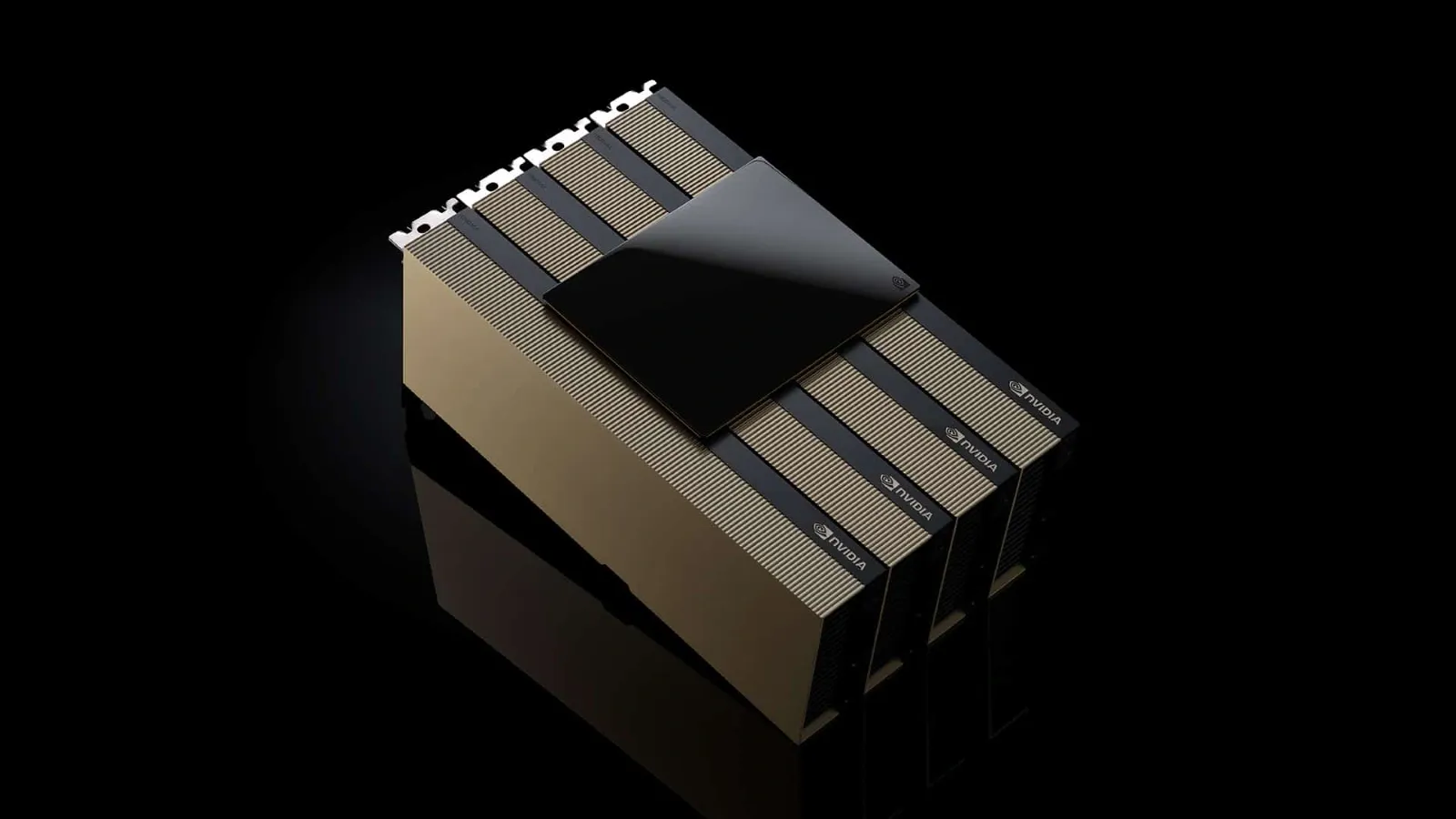
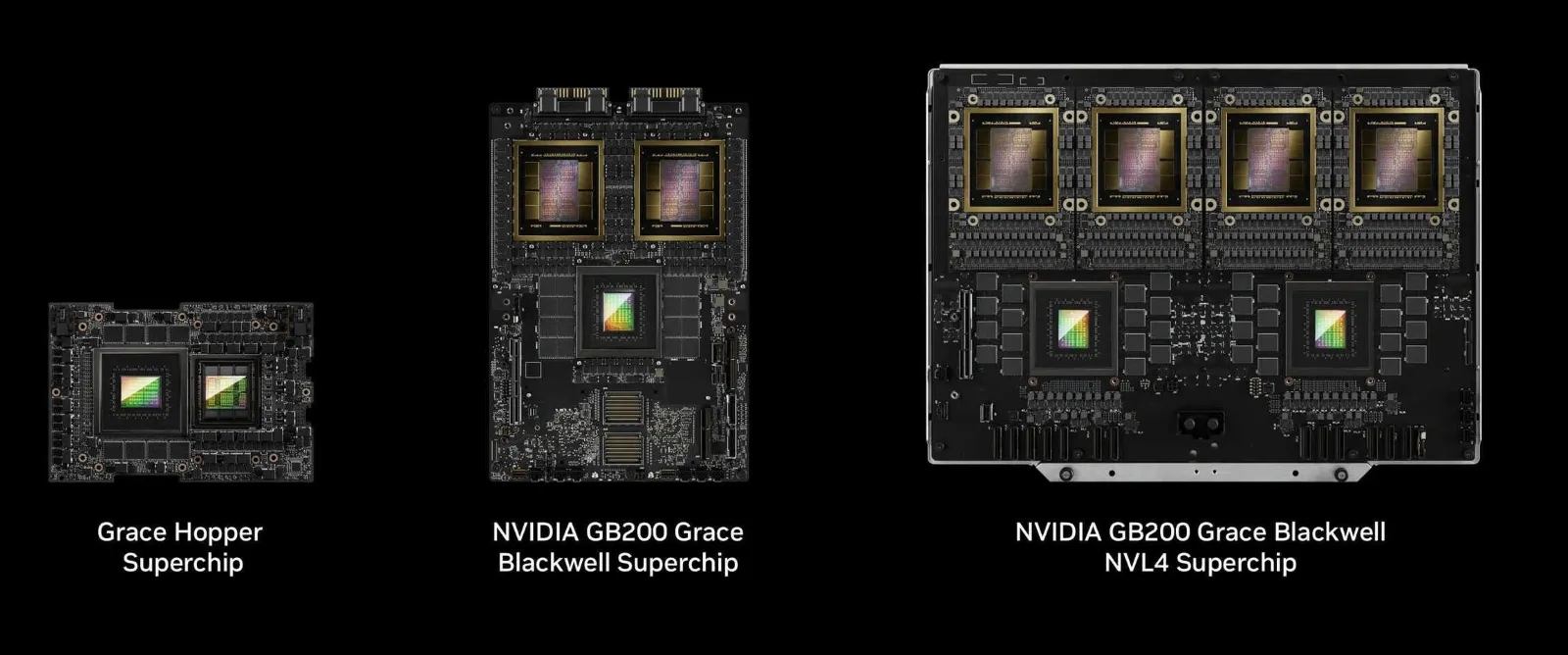
NVIDIA has announced the GB200 NVL4 Superchip, a powerful solution designed for AI and HPC workloads. It integrates cutting-edge hardware for unmatched performance:
- Four B200 Blackwell GPUs connected via NVLink.
- Two Grace ARM-based CPUs on a single motherboard.
- 1.3TB of coherent memory, optimized for demanding workloads.
The GB200 NVL4 offers significant improvements over its predecessor, the GH200 NVL4 Grace Hopper Superchip:
- 2.2x simulation performance.
- 1.8x training performance.
- 1.8x inference performance.
This advanced chip is aimed at hybrid AI workloads and is set to be available in 2H 2024 from providers such as MSI, Asus, Gigabyte, Lenovo, and HP Enterprise.
H200 NVL PCIe GPU: Optimized for Air-Cooled Data Centers
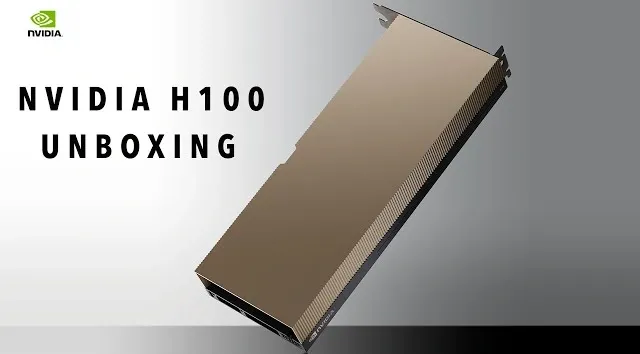
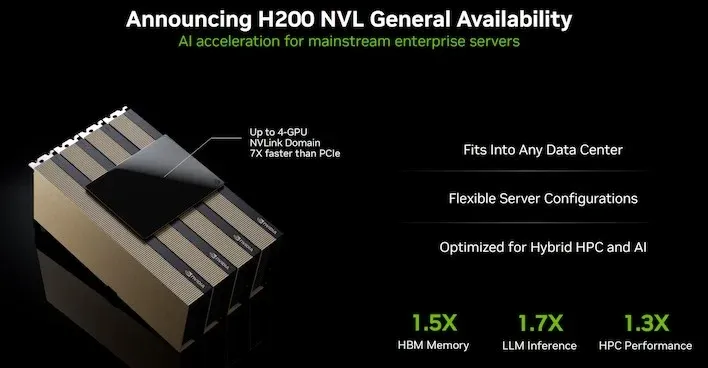
NVIDIA also introduced the H200 NVL PCIe GPU, designed for data centers prioritizing air-cooled configurations. Key specifications include:
- Dual-slot air-cooled design with a flow-through cooler for optimized heat management.
- PCIe 5.0 connectivity, delivering up to 128GB/s bandwidth.
Performance ratings
- 30 TFLOPS FP64 and 60 TFLOPS FP32 compute performance.
- 835 TFLOPS TF32 and 3,341 TFLOPS FP8 Tensor Core performance.
- 1.5x memory capacity and 1.2x memory bandwidth compared to the H100 NVL.
Supports NVLink, offering up to 900GB/s of bandwidth per GPU.
The H200 NVL supports up to four GPUs per rig, making it an efficient upgrade for the 70% of enterprise racks using air cooling.
Sustainability and Versatility
Designed to address the challenges of upgrading, the H200 NVL allows data centers to reuse existing racks by replacing GPUs. This reduces costs and waste while boosting performance.
Addressing Overheating Concerns
Amid reports of overheating in liquid-cooled Blackwell GPUs, NVIDIA highlights the efficiency of air-cooled GPUs like the H200 NVL.
This solution balances performance and thermal management, making it a sustainable choice for many data centers.
Both the GB200 NVL4 Superchip and H200 NVL PCIe GPU represent NVIDIA's commitment to pushing the limits of AI and HPC technology while catering to diverse data center needs.